
Introduction
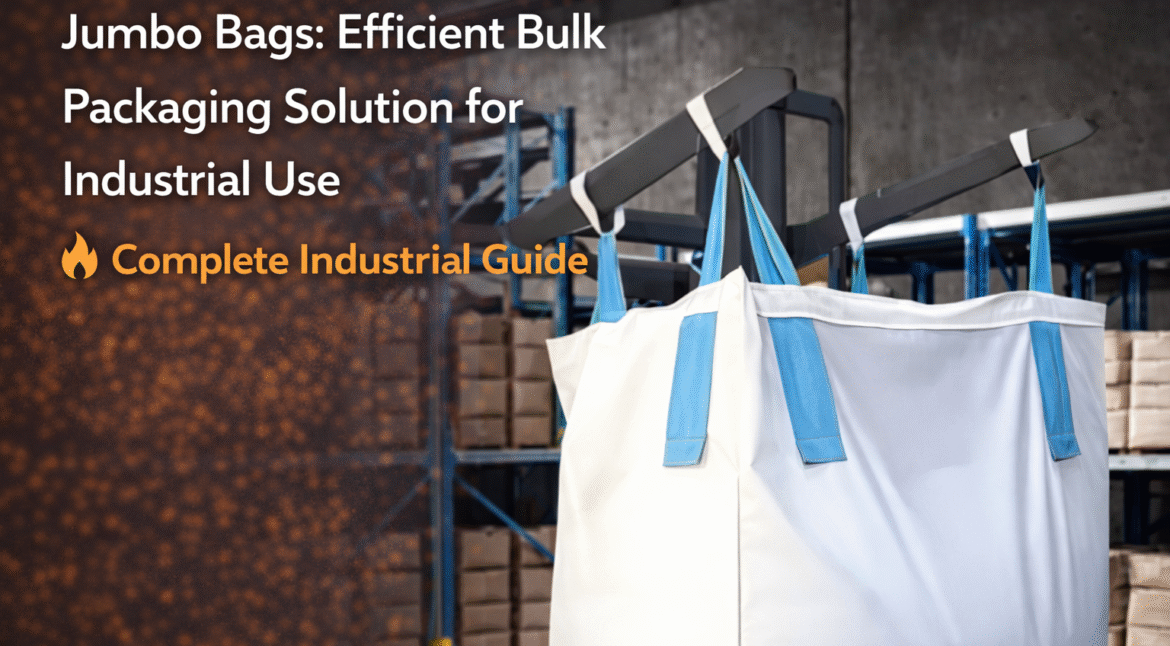
Jumbo bags, also known as bulk bags or FIBC (Flexible Intermediate Bulk Containers), are widely used for storing and transporting large quantities of materials. These bags are designed to handle heavy loads efficiently while ensuring safety, durability, and ease of handling.
From minerals and chemicals to agricultural and construction materials, jumbo bags play a crucial role in modern industrial logistics. This article provides a complete overview of jumbo bags, their features, applications, and importance in bulk material handling.
What are Jumbo Bags?
Jumbo bags are large, flexible containers made from woven polypropylene fabric, designed to store and transport dry, flowable products in bulk quantities.
They are available in different sizes, designs, and load capacities, depending on the specific requirements of various industries.
Key Features of Jumbo Bags
- High Load Capacity: Can carry heavy materials efficiently
- Durable Construction: Made from strong woven fabric
- Reusable & Cost-Effective: Suitable for multiple uses
- Easy Handling: Designed with lifting loops for transport
- Customizable Design: Available in various sizes and specifications
Types of Jumbo Bags
1. U-Panel Bags
Designed with three body panels for better strength and shape retention.
2. Circular Bags
Made from tubular fabric, offering seamless construction and durability.
3. Baffle Bags
Equipped with internal panels to maintain shape and maximize storage efficiency.
4. Conductive & Anti-Static Bags
Used for handling sensitive materials where static control is required.
Applications of Jumbo Bags
1. Mineral & Mining Industry
Used for storing and transporting powders, granules, and bulk minerals.
2. Construction Industry
Ideal for handling sand, cement, and other building materials.
3. Agriculture Sector
Used for grains, seeds, fertilizers, and animal feed.
4. Chemical Industry
Suitable for transporting chemicals and industrial powders safely.
5. Food Industry
Used for bulk storage of food-grade materials with proper safety standards.
Manufacturing & Quality Process
The production of jumbo bags involves several steps:
- Raw Material Selection – High-quality polypropylene
- Fabric Weaving – Creating strong woven sheets
- Cutting & Stitching – Designing the bag structure
- Loop Attachment – Adding lifting handles
- Quality Testing – Load and safety testing
- Packaging – Clean and secure packing
Proper manufacturing ensures durability and safe handling.
Importance of Quality in Jumbo Bags
High-quality jumbo bags ensure:
- Safe handling of heavy materials
- Reduced risk of tearing or leakage
- Long-term usability and cost savings
- Efficient storage and transportation
- Compliance with industrial standards
How Reliable Suppliers Add Value
Consistent Quality
Ensuring strength, durability, and safety in every bag.
Customized Solutions
Providing bags based on size, capacity, and application needs.
Bulk Availability
Supporting large-scale industrial operations.
Timely Delivery
Ensuring smooth supply chain and logistics operations.
Conclusion
Jumbo bags are an essential solution for bulk material handling across various industries. Their strength, flexibility, and efficiency make them ideal for transporting and storing large quantities of materials safely.
Choosing high-quality jumbo bags ensures better performance, reduced handling risks, and improved operational efficiency. For industries that rely on bulk logistics, jumbo bags remain a reliable and cost-effective packaging solution.
We are a trusted supplier and manufacturer of high-quality jumbo bags (FIBC bags) in Saudi Arabia, delivering reliable bulk packaging solutions for a wide range of industrial applications. Our jumbo bags are manufactured using strong woven polypropylene material to ensure high load capacity, durability, and safe handling of bulk materials.
Widely used for storage and transportation of powders, granules, and bulk goods, jumbo bags are ideal for industries such as construction, agriculture, chemicals, and logistics. With strong sourcing capabilities, modern manufacturing standards, and a robust logistics network, we ensure bulk availability, consistent quality, and timely delivery to meet the growing industrial demands across Saudi Arabia.
We are a trusted supplier and manufacturer of high-quality jumbo bags (FIBC bags) in Doha, Qatar, delivering reliable bulk packaging solutions for a wide range of industrial applications. Our jumbo bags are manufactured using strong woven polypropylene material to ensure high load capacity, durability, and safe handling of bulk materials.
Widely used for storage and transportation of powders, granules, and bulk goods, jumbo bags are ideal for industries such as construction, agriculture, chemicals, and logistics. With strong sourcing capabilities, modern manufacturing standards, and a robust logistics network, we ensure bulk availability, consistent quality, and timely delivery to meet the growing industrial demands across Doha, Qatar.
We are a trusted supplier and manufacturer of high-quality jumbo bags (FIBC bags) in Muscat, Oman. delivering reliable bulk packaging solutions for a wide range of industrial applications. Our jumbo bags are manufactured using strong woven polypropylene material to ensure high load capacity, durability, and safe handling of bulk materials.
Widely used for storage and transportation of powders, granules, and bulk goods, jumbo bags are ideal for industries such as construction, agriculture, chemicals, and logistics. With strong sourcing capabilities, modern manufacturing standards, and a robust logistics network, we ensure bulk availability, consistent quality, and timely delivery to meet the growing industrial demands across Muscat, Oman.
We are a trusted supplier and manufacturer of high-quality jumbo bags (FIBC bags) in Dubai, UAE. delivering reliable bulk packaging solutions for a wide range of industrial applications. Our jumbo bags are manufactured using strong woven polypropylene material to ensure high load capacity, durability, and safe handling of bulk materials.
Widely used for storage and transportation of powders, granules, and bulk goods, jumbo bags are ideal for industries such as construction, agriculture, chemicals, and logistics. With strong sourcing capabilities, modern manufacturing standards, and a robust logistics network, we ensure bulk availability, consistent quality, and timely delivery to meet the growing industrial demands across Dubai, UAE.