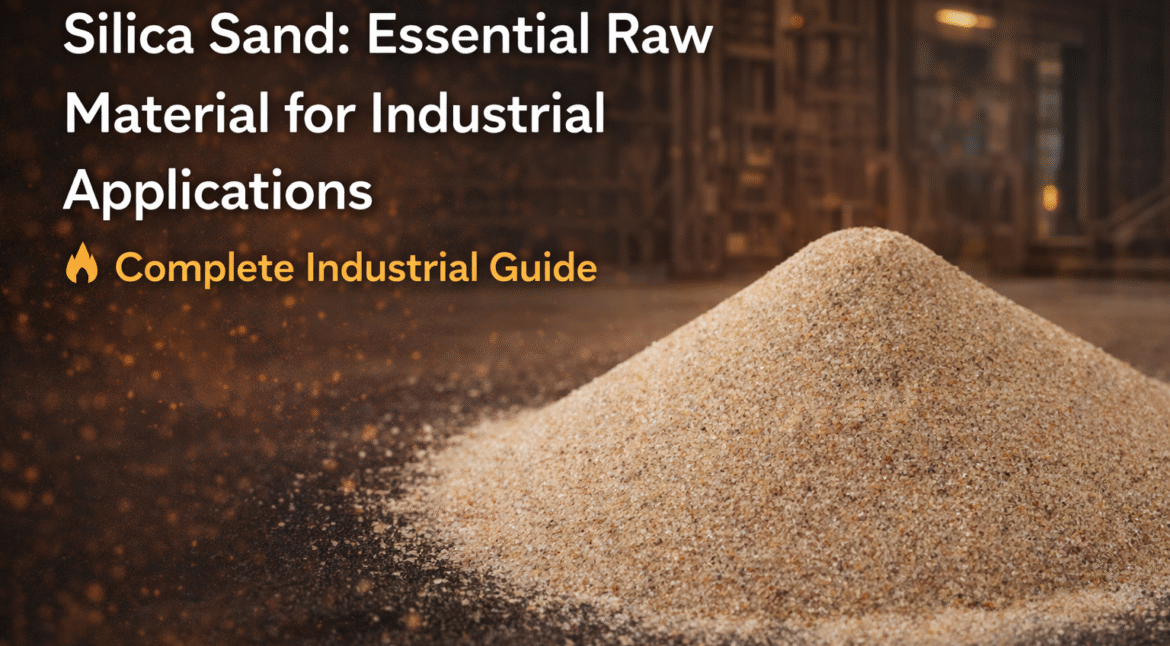
Silica sand is one of the most widely used industrial minerals, playing a crucial role in manufacturing, construction, and processing industries. Known for its high silica content and versatility, silica sand is a fundamental material used in everything from glass production to foundry applications.
Its purity, grain size, and consistency directly impact the performance of end products, making it an essential component in modern industrial processes. This article explores the properties, applications, and importance of silica sand in various industries.
What is Silica Sand?
Silica sand is a naturally occurring granular material composed primarily of silicon dioxide (SiO₂). It is formed from weathered rocks such as quartz and is processed to meet different industrial specifications.
Due to its hardness, chemical stability, and high melting point, silica sand is widely used across multiple industries.
Key Features of Silica Sand
- High Silica Content: Ensures superior quality and performance
- Uniform Grain Size: Essential for precision-based applications
- High Heat Resistance: Suitable for high-temperature processes
- Chemical Stability: Resistant to reactions with other materials
- Versatile Usage: Applicable across various industries
Industrial Applications of Silica Sand
1. Glass Manufacturing
Silica sand is the primary raw material used in the production of glass. It provides strength, clarity, and durability to glass products.
2. Foundry Industry
Used for making molds and cores in metal casting due to its ability to withstand high temperatures.
3. Construction Sector
Used in concrete, mortar, and flooring applications to improve strength and durability.
4. Ceramics & Tiles
Enhances the strength and finish of ceramic and tile products.
5. Water Filtration
Silica sand is widely used as a filtration medium for water purification systems.
6. Paints & Coatings
Acts as a filler to improve texture, durability, and resistance.
Processing & Manufacturing of Silica Sand
The production of silica sand involves several key steps:
- Mining – Extraction from natural deposits
- Washing – Removal of impurities and clay
- Screening – Classification based on grain size
- Drying – Moisture removal for better quality
- Grading – Sorting into different specifications
- Packaging – Supplied in bulk or bags
Proper processing ensures high purity and consistent quality for industrial use.
Importance of Quality in Silica Sand
High-quality silica sand is essential for:
- Achieving better product finish and strength
- Maintaining consistency in manufacturing
- Reducing defects and impurities
- Improving process efficiency
- Ensuring long-term reliability
Industries rely on precise specifications, making quality control a critical factor.
How Reliable Suppliers Add Value
Consistent Quality Supply
Ensures uniform grain size and chemical composition across batches.
Customized Grades
Different industries require specific particle sizes and purity levels.
Bulk Availability
Supports large-scale industrial operations without interruption.
Technical Support
Helps in selecting the right grade for optimal performance.
Conclusion
Silica sand is a vital industrial material that supports a wide range of applications, from glass manufacturing to construction and filtration. Its quality and consistency directly influence the efficiency and performance of industrial processes.
Choosing the right silica sand ensures improved product quality, reduced defects, and reliable long-term performance. For industries that depend on precision and durability, silica sand remains an indispensable resource.
We are a trusted Silica sand supplier & manufacturer in Saudi Arabia, providing high-purity silica sand with uniform grain size and low impurities for a wide range of industrial applications. Our product is ideal for glass manufacturing, foundries, construction, water filtration, ceramics, and chemical industries. With reliable sourcing, advanced processing, and a strong logistics network, we ensure consistent quality, bulk availability, and timely delivery to meet the diverse needs of our clients.
We are a trusted Silica sand supplier & manufacturer in Doha, Qatar. providing high-purity silica sand with uniform grain size and low impurities for a wide range of industrial applications. Our product is ideal for glass manufacturing, foundries, construction, water filtration, ceramics, and chemical industries. With reliable sourcing, advanced processing, and a strong logistics network, we ensure consistent quality, bulk availability, and timely delivery to meet the diverse needs of our clients.
We are a trusted Silica sand supplier & manufacturer in Muscat, Oman. providing high-purity silica sand with uniform grain size and low impurities for a wide range of industrial applications. Our product is ideal for glass manufacturing, foundries, construction, water filtration, ceramics, and chemical industries. With reliable sourcing, advanced processing, and a strong logistics network, we ensure consistent quality, bulk availability, and timely delivery to meet the diverse needs of our clients.
We are a trusted Silica sand supplier & manufacturer in Dubai, UAE. providing high-purity silica sand with uniform grain size and low impurities for a wide range of industrial applications. Our product is ideal for glass manufacturing, foundries, construction, water filtration, ceramics, and chemical industries. With reliable sourcing, advanced processing, and a strong logistics network, we ensure consistent quality, bulk availability, and timely delivery to meet the diverse needs of our clients.